To Bagel or not to Bagel

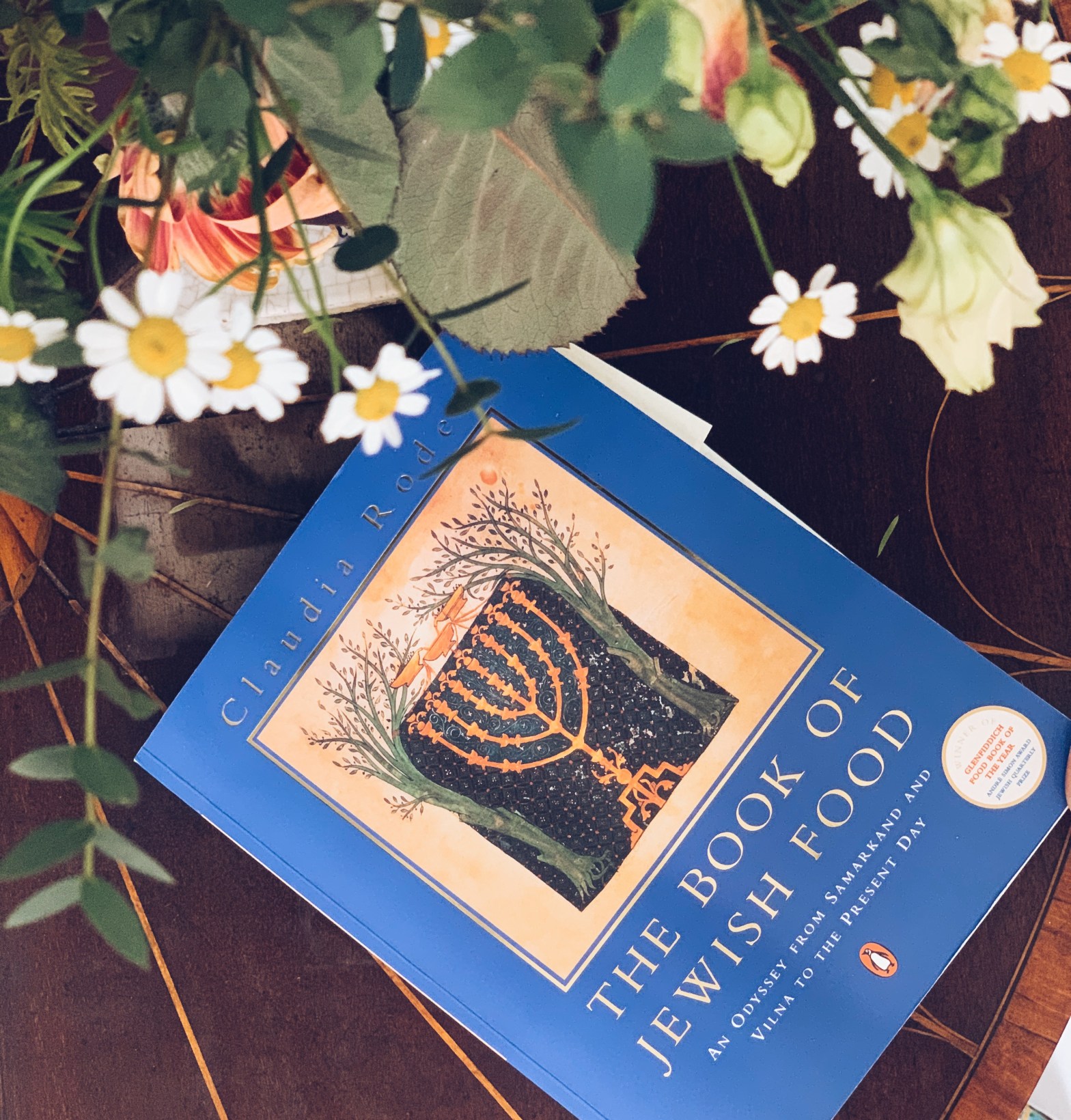
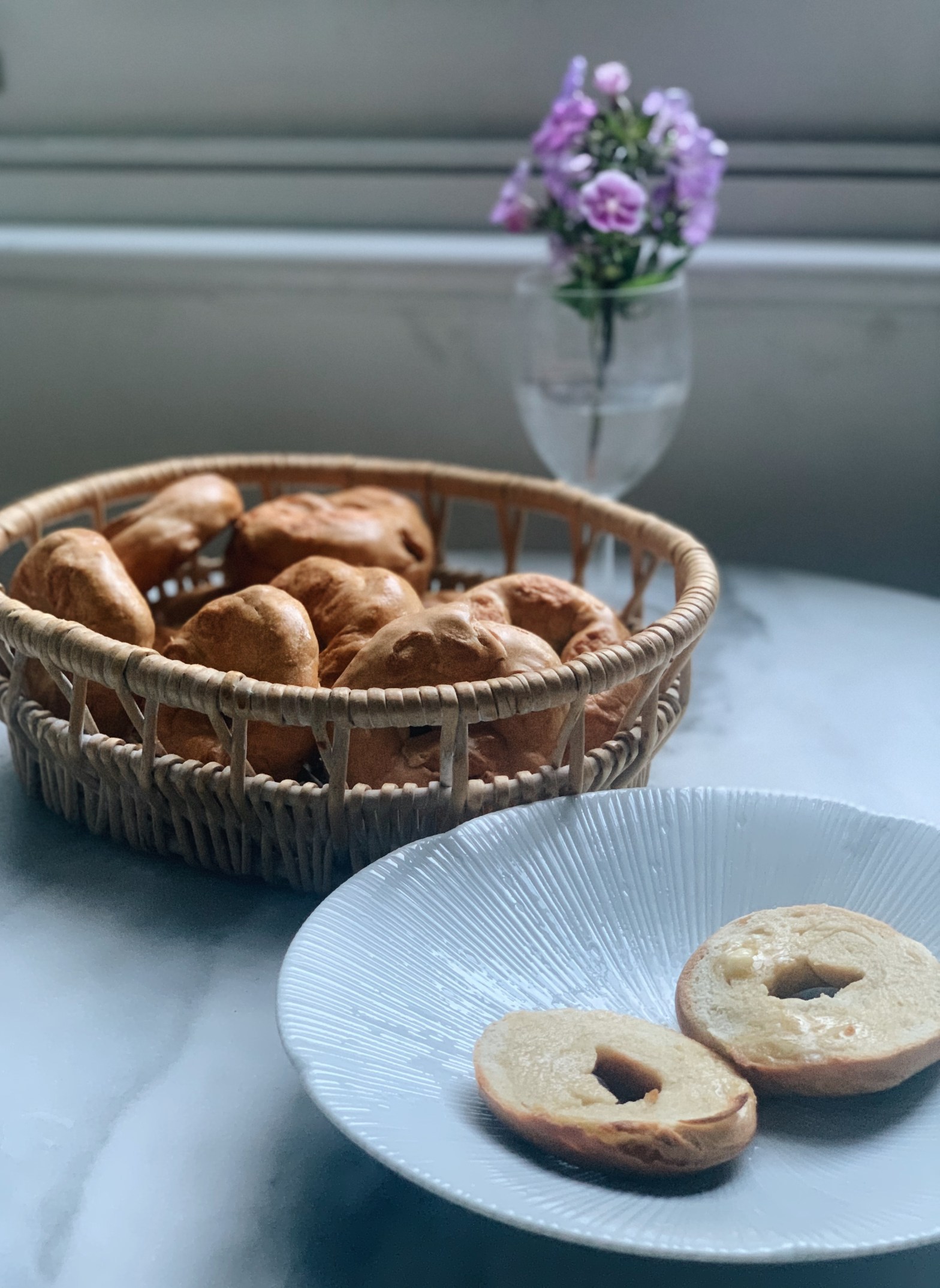
Claudia Roden, whose book has a wonderful history of the bagel- South Germany to the Polish shtetl, and onto pushcarts on the Lower East Side of Manhattan during the first waves of emigration to America, says ‘a bagel is a doughnut with rigor mortis.’ The bagels I made last night had certainly, to quote Withnail, ‘drifted into the arena of the unwell.’

Claudia’s research suggests the addition of an egg to the standard flour, yeast, oil recipe. I made a vegan (standard) and non-vegan egg version to satisfy the hungry household. I haven’t quite pinpointed what went wrong. I suspect it’s a combination of not kneading enough, never being very good at judging the difference between 5 and 7 inches (before you squeeze the ends of the bagel ‘rope’ together into its bracelet shape Claudia says the rope should be 7 inches long), and not leaving them for long enough once shaped to double in size. Or it could be any manner of other incompetence along the way.

Once shaped you should leave them for an hour, and then you pop them into a pot of medium bubbling water for 1-2 minutes. You watch as they rise and then turn them over once to boil for a few more seconds.

I watched and watched as mine stuck resolutely to the bottom, willing them to rise, even timing them with a stopwatch as an incentive to race each other to the top. They eventually made it to the surface, I put them onto a tea towel to dry and they went into the oven for 20 minutes or until golden brown.

When the vegan ones came out of the oven and had cooled, Amy sniffed hers and said, “I’m not sure why I’m sniffing it,” I said, “I know why you are, it’s because it smells doughy.” Never a good sign. She took a bite and said “it’s not something I’d choose to put in my mouth.” Also not good. The ones which included egg and which I brushed with egg white before baking were slightly better. Although there was a bad moment where I was over-enthusiastic with the brushing and tipped the whole egg white into the baking tray. Slime and hard too small bagels…nom nom indeed.

I think the best way to sum up the reception to my bagels is this: We are planning a household marathon watching of Lord of the Rings, complete with ring shaped food. When I spun one of the fresh baked bagels on my finger and said “I can make more of these,’ there was a universal, “No no!! We want ring shaped food.” I’m sure they meant that mine qualified as neither ring-shaped, nor food. It’s a no to more bagels.

In short then, to bagel or not to bagel is a question I’ve now answered. I’m not going to rush to be making these again, and will leave it to those who, as Lee said (see my post Beginnings) have a long and professional history of bagel baking. But even in the hands of an amateur dough handler, I think they’re really quite simple. Just not for this dough-brain.

Brick Lane Beigel Bake has recently revealed its recipe.

p.s. don’t be fooled by the photograph, Stephanie is some kind of magician.
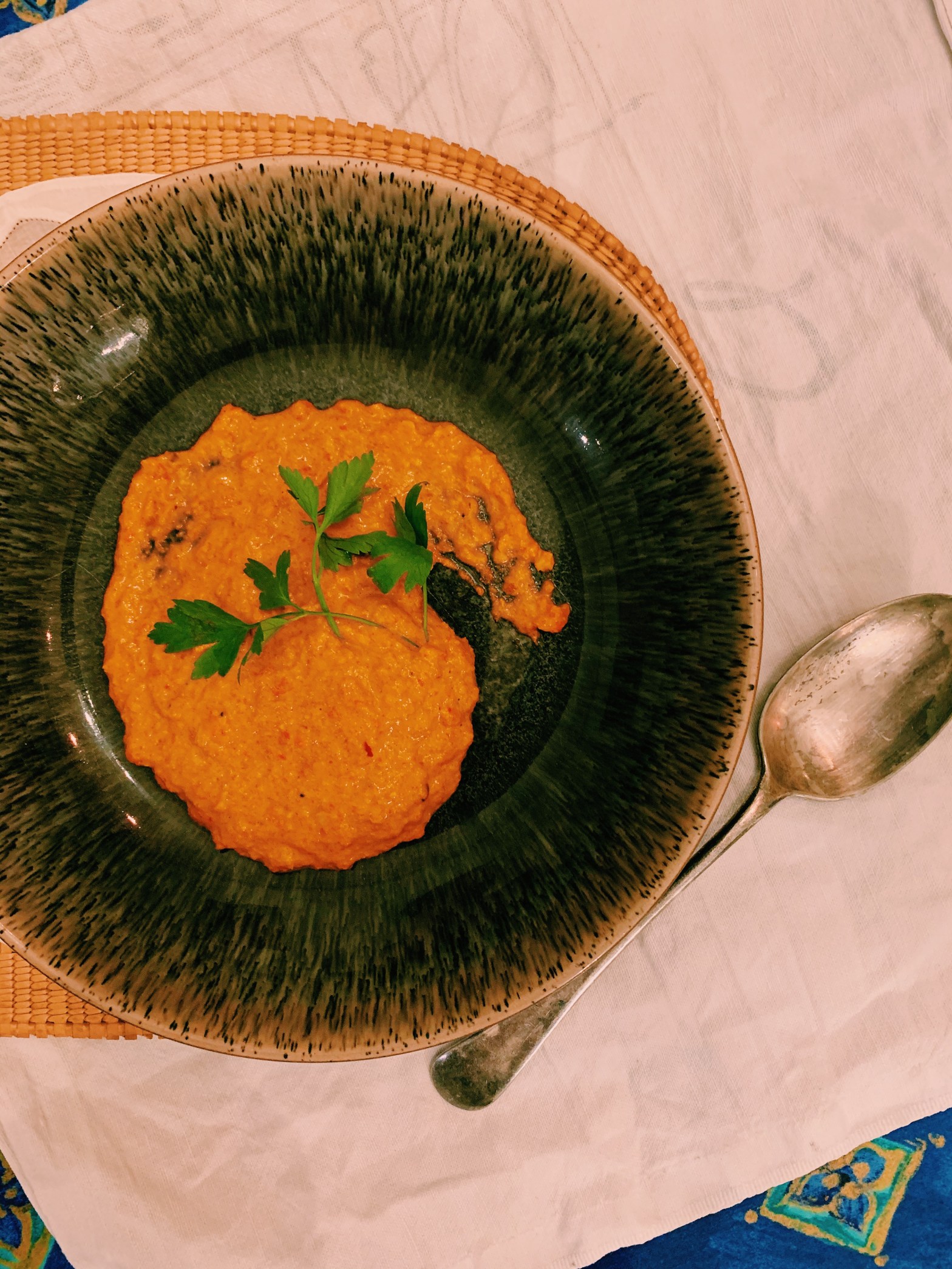
Muhammara

If you’ve never said the word ‘muhammara,’ out loud I’d recommend it. Say it a few more times, it just sounds lovely and if you were a fan of Thundercats growing up, it may also remind you of one of the characters.

Muhammara means ‘reddened’ in Arabic, which makes sense because it’s made with roasted red peppers. Roasted in the sense that you start out by putting them as they are, no oil, no salt, no nothing, under the grill, turning them until all the skin is blackened (keeping an eye on them, I say this for myself more than anyone else- how in the spirit of a blog- I have a story about setting fire to a mince pie in a client’s offices, almost causing a major incident). You leave them to cool, then peel off the skin with your fingers, and pull out the stalk. I have heard that if you put them in a brown paper bag straight out of the oven, it will steam off the skin so you don’t even need to pick at it. Mine worked well enough without the bag (but I’ll keep one handy for later when I’m hyperventilating about the carp- see my post Join me on my Journey). Most of the seeds will come with the stalk, and you’re left with juicy red peppers and a delicious slightly charred smell. A surprising amount of the peppers’ natural oils come out and would make a great easy dressing if you just sliced the peppers and put them on spinach leaves with feta.

I chose Muhammara as my first dish because half of my household is vegan, so the recipe didn’t require any adaptation (going forward if I’m going to feed anyone other than myself I’ll have to work out what to do about all the eggs and cheese in Jewish cooking, I can see myself buying a lot of chickpeas for their water and potato starch). I also chose it because it’s hard to mess up something that turns into a ‘thick paste’ once you’ve whizzed up all the ingredients.

I also think it’s an interesting reminder of a word I’ve just learnt- “Ashkenormative.” I’m applying this now (out of context) to remark on the perception of Jewish food, certainly where I grew up, as very much based on Askhenazi cuisine (chicken soup, latkes, gefilte fish), rather than the Sephardi and other influences. Finally, wrapped up in this, it’s a nod to a controversy, which I am not going to weigh in on, over whether Jews can lay claim to particular foods: http://www.bbc.com/travel/story/20171211-who-invented-hummus

Claudia’s recipe is a Syrian one from Dalia Carmel, and although hers does not specifically call for it, other recipes say the key ingredient is Aleppo peppers (another wonderful thing to say out loud). Yotam Ottolenghi also has a recipe.

It’s essentially walnuts, peppers, a bit of bread (Claudia uses two slices of brown bread with the crusts cut off, not the breadcrumbs which Ottolenghi’s recipe calls for), pomegranate molasses, lemon, a whole chilli, oil and seasoning blended together. Ottolenghi says he can’t live without garlic, I’ve had to for a long time, as consecutive boyfriends were allergic/intolerant (to garlic, and me, as it turns out), and one of my household now is too. I followed Claudia’s recommendation of adding in cumin to make sure it had some punch.

The bagels had what can best be described as a charitable reception at dinner last night (on which more later). But the Muhammara went down very well. I found myself saying, “is it wrong to love my muhammara?”

Join me on my journey

I’ve probably watched Julie & Julia too many times, who doesn’t love Meryl Streep, Stanley Tucci and Amy Adams? They could act out a supermarket shop and I’d be scintillated. My brother and I were early Tucci fans-repeatedly watching Undercover Blues (1993) in which he plays a character called Muerte, adopting his catchphrase, ‘my name is Muerte,’ and driving my mother completely mad. If you don’t know the film, and I’ve got no idea if it’s worth knowing, you can see 9 minutes of Muerte’s best scenes on YouTube. Typing ‘YouTube’ is making me wonder if anyone has a cooking channel where they make all kinds of stew, the name writes itself.

But as with any journey in which you set out only to realise you are in urgent need of a new thermos, I digress. This blog is accidental fan fiction (not of Julie Powell’s book/blog which I haven’t read, but of the Adams/Streep/Tucci combo). I decided a few days ago to do a Julie and cook my way through Claudia Roden’s cookbook, following her journey from Samarkand and Vilna to the present day. It’s beautifully written, a favourite of Jay Rayner’s and took 16 years to research and write. Given how many iterations of carp there are in the book, I think it will probably take me as long to make everything.

When I mentioned my plan to my friend Katie she said that I should introduce my own twists. She’s referring to the time I made her salmon and cream cheese on potato waffles (as a gluten free/what do I have in the freezer panic moment), so don’t hold out hope of culinary greatness. As Julia apparently said of Julie when she heard about the blog, I am ‘not a serious cook.’

The plan, twists aside, is relatively simple. I’m going to make the dishes, a few recipes per week, mainly around the contents of my Oddbox, which given that sometimes I get just a handful of any particular ingredient will mean downsizing the recipes. Things tend to go wrong for me when I have to do maths. When we’re all allowed back into each other’s homes, I’m going to cook with friends (some of them know this already, others will be taken by surprise). Laying out plans to cook a meal together, chopping, stirring and watching as those plans inevitably and comically go awry, is one of the things I’ve missed.

Thank you to Mark for the punny name (yom is day in Hebrew), to Stephanie for the website and taking photos (my attempts will be dismal) and to the friends who will be cooking with me (you know who you are and if you don’t…SURPRISE!).

Beginnings

My early awareness of Jewish cooking was in three courses: Soup, Bagel, and Cheesecake.

Soup: My mother’s chicken soup. This will be unsurprising for anyone brought up knowing that the secret to soothing the soul lies in extensive simmering of a whole chicken, assorted veg and handfuls of herbs. There’s a reason it’s called Jewish penicillin. More unexpected is that it is my non-Jewish mother who should be awarded the Chicken Soup Crown (which as everyone knows is a tiara of white feathers with an egg shaped pearl at its centre). I can’t date my earliest memory of her chicken soup. It’s as if it was there from time immemorial, as if when we all crawled out of the primeval ooze it was, yes, you guessed it, a soupy swamp. I just know that as soon as I was old enough to have appliances, my freezer was always full of trays of said chicken soup, and it’s got me through many a tight spot. My mother (and Tanya Gold who writes about the same effect) was right when she remarked that there’s something truly comforting about walking into a kitchen and seeing all the steam rising from that bubbling saucepan. My mother also says that unlike other things you keep on the back burner in life, it’s something you won’t forget about and will be inevitably nourishing.

Since writing this I’ve spoken to said mother. She is very happy to assume the crown, and told me that when aeons ago she made her soup for glass artist Sam Herman who sadly passed last year, he said to her, ‘I have to say, this is better than my mother’s chicken soup.’

As soon as we can all lawfully meet up in kitchens, I’m going to ask my mother to show me step by step how she makes this deliciousness, and I’ll demonstrate my new found skills at making matzo balls the size and consistency of small meteors.

Beigel/Bagel (but never Beagle): I have clear memories aged 12 onwards of my step-brother turning up most weekends with a brown paper bag of bagels from the Brick Lane Beigel Bake, and I’m fairly sure I hogged (how unkosher of me) all of them. As Lee said when he inspected my bagels yesterday “there’s a reason there are bakeries run by generations of the same family perfecting their bagel recipes.” He’s right of course, I am not going to take the world by storm with my bagels, I could however break a window.

Cheesecake: Aged 16 I was at my friends Tamara and Adam’s house when their mother, a glorious woman, magicked up a cheesecake. In my memory and in the re-telling she bursts into the room saying “don’t worry I’ve got a cheesecake.” My mother has just reminded me that when we were doing races, Adam’s mother used to bring one along and say to him ‘you must eat your cheesecake.’ She couldn’t remember if it was before or after the race.

I’ve never made one, but Claudia Roden has a recipe so I’ll be attempting to follow it for Shavuot on 16 May. I can already see it now as the inverse of those cheesecakes of 24 years ago. It’ll be a sliding, gloopy (and not in the Gwyneth sense) mess of a thing. When I produce it, I’ll say, “do worry, I’ve got a cheesecake.”